

서 론
뇌전증은 다른 신경계 질환과 달리 진료실에서 증상을 직접 관찰하기 어려운 일과성 질환이라는 고유한 특성이 있다. 따라서 환자와 보호자를 통한 철저한 병력 청취가 진단과 치료 방침 결정에 절대적인 비중을 차지한다[1]. 즉 제한된 외래 시간 내에 핵심 정보를 얼마나 효율적이고 정확하게 파악하느냐가 진료의 질을 좌우한다[2].
최근 뇌전증 전문의 대상 조사에 따르면 현재 국내의 외래 환경은 초진 10분, 재진 4분 내외로 보고될 만큼 진료 시간이 절대적으로 부족하다[3]. 국제항뇌전증연맹(International League Against Epilepsy, ILAE), 영국 국립보건임상연구원(National Institute for Clinical Excellence, NICE) 등 주요 가이드라인은 뇌전증의 분류와 진단 접근, 항발작약물 선택 및 치료 원칙을 비교적 상세히 제시하지만 제한된 외래 시간 내에 병력을 어떤 순서로 구조화해 질문하고 이를 어떤 형식으로 기록할지에 대한 구체적 서식이나 흐름 제시는 상대적으로 부족하다[2]. 이러한 간극은 의료진의 경험에 따른 진료 편차를 유발하고, 나아가 환자 안전에 필수적인 정보 누락으로 이어질 위험이 있다[4]. 특히 국내에서는 뇌전증 외래 진료에서 활용할 수 있는 표준화된 기록 구조나 권고안이 제시된 바 없어 의료기관 및 의료진에 따라 병력 청취와 기록 방식이 다양하게 이루어지고 있는 실정이다.
최근 대한뇌전증학회는 국내 외래 진료 현실을 반영하여 한국형 뇌전증 공통 데이터 요소(common data elements, CDE)를 개발하였고, 이를 바탕으로 초진, 정기적 재평가 및 재진 외래에서 활용할 수 있는 표준화된 서식을 제시하였다. 이 도구는 연구용으로 방대한 정보를 수집하기 위한 서식이 아니라 실제 외래 진료에서 임상적 의사결정에 직접 영향을 미치는 최소 필수 정보를 구조화하여 기록하기 위한 실용적 표준이라는 점에서 의미가 있다. 또한 표준화된 기록은 진료 연속성을 높이고, 향후 다기관 공동 연구와 삶의 질 향상 활동의 기반 자료로도 활용될 수 있다.
본 논문은 뇌전증 외래 진료 전반에 대한 포괄적 임상 진료 지침을 제시하는 것이 아니라 한국형 뇌전증 CDE를 기반으로 외래 진료에서 활용 가능한 전자건강기록(electronic health record, EHR) 서식의 설계 원칙, 방문 유형별 핵심 기록 항목, 실제 적용 전략에 대한 실용적 권고안을 제시하는 것을 목적으로 한다. 특히 서식을 초진, 재진, 정기적 재평가의 세 범주로 구분하고 각 방문 유형에서 무엇을 반드시 구조화하여 기록할 것 인지와 어떤 정보는 중복 입력을 줄이되 임상적 의사결정의 맥락은 남겨야 하는지를 중심으로 정리하고자 한다[3].
방 법
권고안 개발의 근거 자료로는 대한뇌전증학회가 수행한 한국형 뇌전증 CDE 개발 연구, 해당 가이드북의 변수 정의, 허용값, 기록 예시 그리고 관련 주요 국제 문헌과 표준 분류 체계를 사용하였다[3]. 선행 한국형 뇌전증 CDE 개발 연구는 국내 대학병원 소속 뇌전증 전문의를 대상으로 수정 델파이(modified Delphi) 기법을 이용한 3차례 합의 과정을 통해 수행되었으며, 실제 외래 진료에서 활용 가능한 재진용 서식과 초진/정기적 재평가용 서식을 도출하였다. 본 권고안은 이러한 델파이 기법 기반 결과를 토대로 실제 성인 뇌전증 외래의 EHR 문서화 흐름에 맞는 실용적 적용 원칙과 방문 유형별 핵심 기록 요소를 정리하기 위해 작성되었다.
권고안의 최종 문안화와 서식 재구성은 대한뇌전증학회 Clinical CDE 과제 중앙운영위원회가 담당하였다. 중앙운영위원회는 제1저자를 제외한 4인의 중앙위원으로 구성되었으며 최종 권고 문안은 이 위원회에서 확정하였다. 그러나 본 권고안은 소수 저자의 개인 의견에 근거한 서술이 아니라 2023년부터 2026년까지 학회 주도의 다단계 전문가 의견 수렴 과정을 반복적으로 거쳐 이를 바탕으로 정리된 실용적 합의문이다.
의견 수렴 과정에는 중앙운영위원회 회의 20회, 21개 병원을 대표하는 뇌전증 전문가들이 참여한 성인소위원회 회의 8회, 소아·성인 임상팀 회의 10회(이 중 1회는 소아팀 단독 사전 회의), 대한신경과학회 및 대한뇌전증학회 관련 학술 행사 발표 3회, Clinical CDE 워크숍 4회가 포함되었다. 성인소위원회에서는 성인 뇌전증 외래에서 실제로 필요한 핵심 항목의 우선순위, 서식의 임상적 사용 가능성, 항목 간 중복 최소화를 논의하였다. 소아·성인 임상팀 회의에서는 CDE 항목을 EHR 서식으로 구현할 때의 표현 방식과 성인 및 소아 공통 항목의 정의 및 입력 형식을 조율하였다. 이와 같이 정리된 내용은 다시 성인소위원회와 중앙운영위원회에서 재논의되었고 학술대회 발표와 워크숍에서 수렴된 추가 의견을 반영하여 반복적으로 수정 및 보완하였다.
권고안 정리의 기본 원칙은 다음과 같다. 첫째, 실제 외래 진료에서 사용 가능해야 한다. 둘째, 진단 및 치료와 관련된 임상적 의사결정에 직접 기여해야 한다. 셋째, 기존 시스템에 이미 존재하는 중복 정보 입력은 최소화해야 한다. 넷째, 발작 및 뇌 전증 분류는 표준 분류 체계와 정합성을 가져야 한다. 다섯째, 향후 학회 기반 검증과 주기적 업데이트가 가능해야 한다. 본 권고안은 별도의 정량적 투표를 포함한 정식 델파이 기법이나 임상 진료지침 개발 절차에 따른 체계적 문헌 연구, 근거 수준 평가, 권고 강도 산정을 시행한 지침은 아니다. 그러나 이는 개별 저자의 의견이 아니라 기존 CDE 합의 연구와 다년간의 학회 기반 전문가 논의, 발표, 피드백 과정을 토대로 정리된 실용적 합의 권고안이다. 현재 해당 서식은 국가 연구 과제를 통해 다기관에서 전향적으로 적용되고 있으며 실제 의료기관에서의 사용 가능성과 적용 가능성 평가가 진행 중이다. 본 권고안의 직접적인 적용 대상은 일반적인 성인 뇌전증 외래 진료이다.
권고안의 근거 및 상세 설명
1. 권고 1: 한국형 뇌전증 서식 사용
한국형 뇌전증 CDE 서식에 포함된 핵심 임상 항목은 제한된 시간 내에 합리적인 의사결정을 위하여 무엇을 확인해야 하는지를 제시한다. 이제 과제는 이러한 항목들을 실제 진료 흐름 속에서 일관되게 누락 없이 구현할 수 있도록 하는 구조적 장치를 마련하는 것이다. 국내 외래 진료는 환자 1인당 진료 시간이 짧고 EHR 사용과 함께 진료 외 시간까지 문서 작업이 확대되는 경향이 보고되어 필수 정보를 효율적으로 수집하는 표준화된 체계가 절실하다[5,6].
한국형 CDE는 이러한 국내 현실을 반영하여 실제 외래 진료에 최적화된 방식으로 설계되었다는 점에서 기존 국제 CDE와 차별화된다. 미국 국립신경질환뇌졸중연구소(National Institute of Neurological Disorders and Stroke, NINDS)에서 제안한 뇌전증 CDE는 항발작약물, 동반 질환뿐 아니라 신경심리, 삶의 질, 병리 등 방대한 영역을 포괄하고 있어 제한된 외래 시간 안에 이를 일괄적으로 작성하면 진료의 질 저하와 기록 부담을 초래할 수 있다[2,7]. 한국형 CDE는 초진 약 10분, 재진 약 4분이라는 국내 환경을 고려하여 진단과 치료 전략 결정, 안전 판단에 직접적인 영향을 미치는 최소 필수 항목만을 우선적으로 구조화하였다[3]. 장기 예후나 삶의 질과 같은 환자 중심 결과는 임상적으로 중요하지만, 본 핵심 CDE는 제한된 외래 시간 안에서 즉각적인 의사결정에 필요한 최소 항목을 우선 선정하였다. 따라서 삶의 질은 현 버전에서 독립적인 핵심 항목으로 구조화되지는 않았으나 발작 조절 상태와 약물 부작용 평가를 통해 임상적으로 함께 고려되어야 한다[3]. 이는 의료진이 제한된 시간 내에 필수 정보를 보다 일관되게 확인하고 기록하도록 돕는 실용적 도구로 활용될 수 있다.
표준화된 CDE의 도입은 진료 연속성 측면에서도 중요한 의미를 갖는다. 기존의 비정형 서술 기록은 정보의 누락이 잦고 기관 간 호환이 어려웠으나 표준화된 CDE를 사용하면 환자가 병원을 옮기거나 담당 의료진이 변경되어도 핵심 병력과 치료 반응을 일관된 공통 언어로 파악할 수 있어 정보의 공백을 줄이는 데 도움이 된다[7,8]. 또한 이러한 구조화된 데이터의 축적은 다기관 자료의 통합 및 비교 분석을 가능하게 하여 향후 대규모 관찰 연구나 질 향상, 나아가 임상 의사결정 지원 도구 개발을 위한 데이터 인프라로 활용될 수 있다[9].
구조화된 CDE는 교육적 도구로서의 가치도 지닌다. CDE가 제시하는 흐름을 따라가는 것만으로도 표준적인 진료 과정을 수행할 수 있어 진료의 질적 편차를 줄이는 안전망 역할을 수행한다. 최근 신경과 전공의 교육 과정이 실제적인 직무 수행 능력을 강조하는 역량 기반 교육(competency-based education) 방향으로 변화하는 흐름에서 한국형 CDE는 전공의가 뇌전증 외래 진료의 핵심 항목을 체계적으로 학습하고 표준화된 진료 흐름을 익히는 데 구체적인 기준으로 활용될 수 있다[10].
마지막으로 한국형 CDE는 고정불변의 서식이 아니라 임상 상황에 따라 유연하게 대처할 수 있는 모듈형 구조를 지향한다. 현재 제안된 CDE는 일반적인 뇌전증 환자를 위한 기본 모듈이며, 향후 약물저항뇌전증, 첫 발작, 임신 중 뇌전증 등 특수한 관리가 필요한 인구군에 대해서는 별도의 심화 모듈을 추가하거나 제외하는 방식으로 확장될 수 있다. CDE 도입이 기록 부담으로 이어지지 않기 위해서는 현실적인 지원 전략이 필수적이다. 핵심 항목은 최소 수준으로 유지하되 EHR 내 자동 완성 기능, 서식 최적화, 사전 설문 활용 등을 통해 입력 부담을 최소화할 필요가 있다. 아울러 학회 주관 교육과 항목별 정의집 기반의 품질 점검이 함께 갖추어질 때 한국형 CDE는 비로소 진료 현장에 안착할 수 있을 것이다[11].
2. 권고 2: 외래 기록 구조
뇌전증 외래 서식은 모든 방문에 동일한 항목을 반복적으로 적용하는 방식보다 방문의 목적에 따라 초진, 재진, 정기적 재평가로 구분하여 설계하는 것이 합리적이다. 초진은 환자의 기본 상태를 파악하고 진단적 가설을 세우는 단계이며 재진은 직전 방문 이후의 변화와 치료 반응을 중심으로 경과를 확인하는 단계이다. 정기적 재평가는 시간 경과에 따라 진단과 분류가 여전히 타당한지 다시 점검하고 약물저항뇌전증 여부나 추가 치료 전략을 검토하는 단계이다. 이러한 구조는 방문 목적에 맞는 최소 필수 항목만을 제시함으로써 기록 부담을 줄이고, 동시에 기록의 일관성과 재현성을 높이는 데 도움이 된다.
3. 권고 3: 초진 핵심 항목
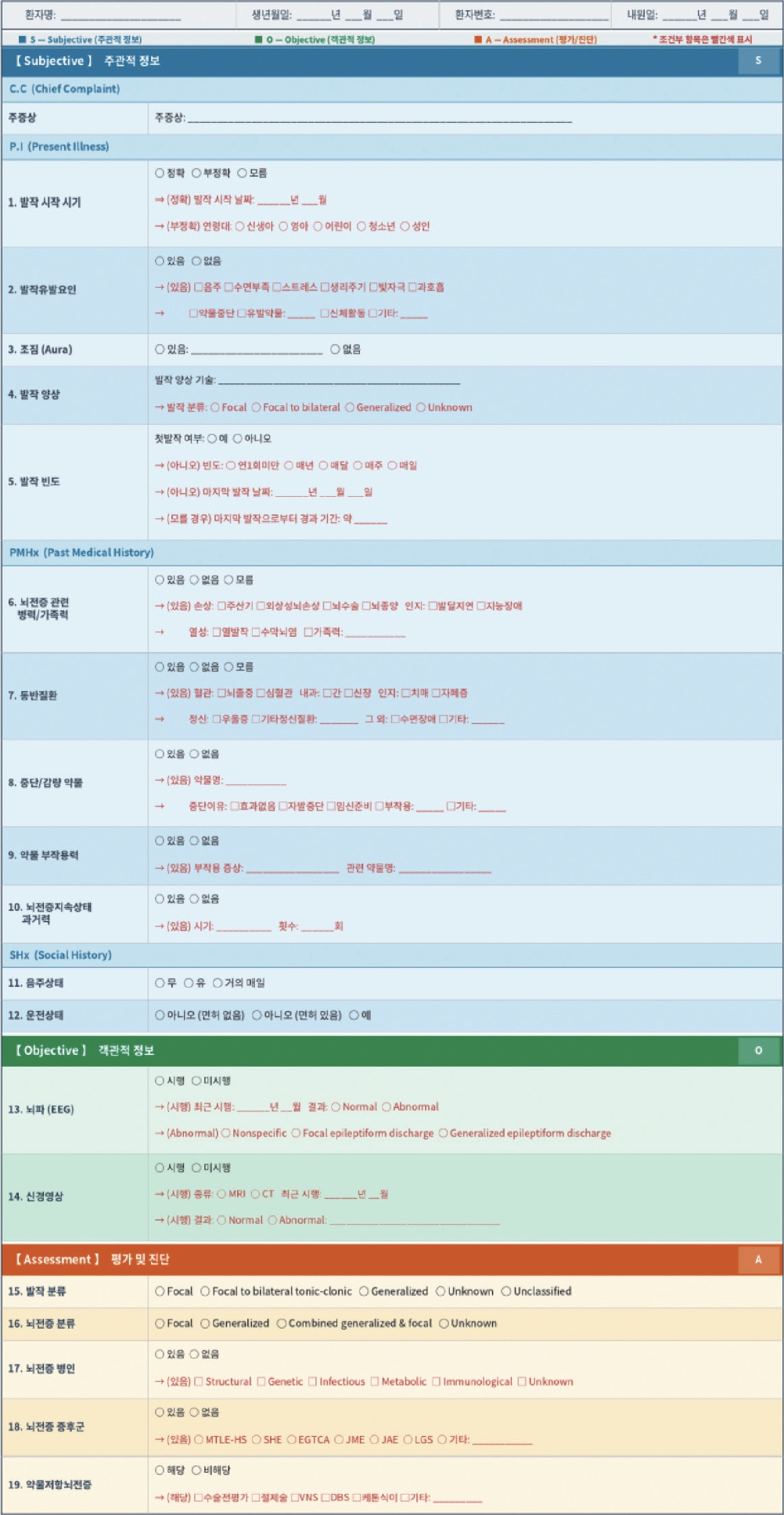
초진 외래 진료는 정보를 최대한 많이 수집하는 과정이 아니라 제한된 시간 안에 발작 사건의 특성을 규정하고 진단, 분류의 틀을 세운 뒤 초기 치료 전략을 결정하는 과정이다. 따라서 개별 항목을 기계적으로 확인하기보다는 표준적인 Subjective, Objective, Assessment, Plan (SOAP) 진료 맥락 속에서 필수 정보가 자연스럽게 포착되도록 구조화하는 것이 진료 효율을 높이는 핵심이다. 이 과정에서 정보가 불완전한 것은 자연스러운 일이며 미확인 항목은 추후 재평가의 근거로 남겨두는 유연함도 필요하다. Table 2는 초진에서 확인해야 할 핵심 CDE 항목을 SOAP 구조에 따라 정리한 것으로, 이하 본문은 각 항목의 임상적 의미와 확인 방법을 구체적으로 설명한다. 초진 외래에서 활용 가능한 CDE 기록 서식의 예는 Fig. 1에 제시하였다.
4. 권고 4: 초진 항목의 근거
초진 외래 서식에 포함된 각 항목은 임의로 구성된 것이 아니라 기존 문헌과 국제적으로 사용되는 분류 체계를 참고하여 선정하였다.
1) 주관적 정보(subjective): 핵심 병력의 구조화
초진의 핵심은 환자의 진술을 통해 발작 양상을 재구성하고 진단의 단서를 찾아내는 현 병력 청취에 있다. 다음의 항목들은 별개의 질문이 아니라 환자의 병력 이야기 속에서 자연스럽게 확인되어야 한다.
(2) 유발 요인(precipitating factors)
수면 부족, 음주, 스트레스, 복약 누락 등은 약물 치료와 별개로 발작 재발에 영향을 줄 수 있으며, 약물 치료 반응을 평가할 때 혼란을 줄 수 있는 요인이 된다[14,15]. 초진에서는 생활습관을 전체적으로 나열하기보다 발작과의 시간적 연관성이 뚜렷하거나 반복적으로 동반되는 요인을 중심으로 기준점을 정리하는 것이 효율적이다. 특히 수면 부족은 흔한 유발 요인 중 하나로 교대 또는 야간 근무, 수면 시간 감소, 불면증의 악화 등 최근 변화가 있었는지 확인하는 것이 중요하다[16,17]. 또한 음주, 특히 폭음은 발작 악화와 연관될 수 있으며 음주 중단 이후 금단 시기에는 발작 위험이 증가할 수 있으므로 단순한 음주 여부를 넘어 음주 양상 변화와 발작과의 시간적 연관성을 함께 확인하는 것이 바람직하다[18,19]. 이러한 접근은 불필요한 약물 증량을 줄이고 생활 조정만으로 개선 가능한 요인을 선별하여 초기 교육과 추적 진료의 방향을 설정하는 데 도움이 된다.
(3) 조짐(aura)과 발작 양상(semiology)
조짐은 발작의 시작을 환자가 주관적으로 경험하는 가장 초기 증상으로 단순한 경고 신호가 아니라 발작의 첫 임상 발현일 수 있다. 따라서 조짐을 묻는 목적은 유무를 확인하는 데 그치지 않고 발작이 어떻게 시작되어 어떤 순서로 진행하였는지 시간 순서대로 재구성하여 진단과 분류의 정확도를 높이는 데 있다[20,21].
외래에서 조짐과 임상 양상은 짧게라도 다음 네 가지를 시간 순서로 정리해 두면 기록의 일관성과 재현성을 높일 수 있다. 첫째, 처음 나타난 증상이 무엇이었는지(감각, 자율신경, 인지, 운동 등), 둘째, 그 증상이 얼마나 지속되었는지, 셋째, 그 다음 어떤 증상이 이어졌는지(행동 정지, 자동증, 편측성, 언어 변화, 강직, 간대 등), 넷째, 사건 중 또는 직후의 의식 소실 여부와 외부 자극에 대한 반응 가능 여부이다[22,23].
다만 조짐은 발작의 시작 부위 추정에 도움을 줄 수 있으나 조짐만으로 병변 위치를 특정하기는 어렵다[22]. 환자의 표현이 모호하거나 기억이 왜곡될 수 있고 관찰자 정보가 부족한 경우도 흔하기 때문이다. 따라서 보호자 목격 진술과 함께 해석하는 것이 중요하다. 특히 환자가 주관적으로 느끼는 조짐과 환자는 기억하지 못하지만 보호자가 목격한 행동 변화(입맛 다시기, 만지작거리기 등의 자동증)를 명확히 구분하여 기록하면 발작의 시작과 진행 양상을 재구성하는 데 도움이 된다. 촬영이 가능하다면 스마트폰 영상은 발작의 시간 경과와 운동 증상, 행동 양상을 객관적으로 확인하는 데 도움이 되므로 적극적으로 활용할 수 있다[24].
(4) 발작 빈도(frequency)
발작 빈도는 뇌전증 환자의 질병 경과를 이해하는 데 기본적인 정보 중 하나이다. 초진에서는 단순히 현재 발작이 얼마나 자주 발생하는지를 묻는 것에 그치지 않고 첫 발작이 언제 발생했는지, 이후 발작이 어떤 간격과 패턴으로 반복되어 왔는지, 마지막 발작이 언제였는지를 함께 확인하는 것이 중요하다. 이러한 정보는 발작이 일정한 간격으로 반복되는지, 점차 빈도가 증가하는지 등을 파악하는 데 도움을 준다. 또한 발작 발생 시점과 빈도를 함께 기록하면 진단 과정에서 발작 유형을 추정하고 향후 치료 전략을 계획하는 데 중요한 기초 자료가 된다[25].
(5) 과거력 및 사회력(past medical history & social history)
② 약물 이력
과거에 사용한 항발작약물의 종류와 중단 이유를 정리하는 것은 이후 약제 선택의 효율성과 정확도를 높인다. 이전 약제 중단 이유는 효과 부족과 부작용을 구분해 기록하고 임신 계획과 같은 상황적 요인이나 비용, 추적 중단 등 비의학적 요인도 함께 정리하면 치료 실패 여부를 해석하는 데 도움이 된다[29]. 또한 순응도 문제가 있었다면 이에 대한 면밀한 상담도 요구된다.
③ 뇌전증지속상태(status epilepticus)
뇌전증지속상태는 발작이 비정상적으로 오래 지속되거나 반복되어 그 사이 회복이 충분하지 않은 상태로 조기 치료가 필요한 신경계 응급 상황이다. 초진에서는 과거 뇌전증지속상태 병력이나 장시간 지속 발작, 짧은 간격으로 반복되는 발작의 경험을 확인하여 향후 응급 위험을 평가하는 것이 바람직하다[30].
2) 객관적 정보(objective): 기존 검사 결과의 확인
타 병원 자료나 과거 검사 결과가 있다면 이를 요약하여 기록한다. 만약 초진 시점에 검사 결과가 없다면 무리하게 기록하려 하지 말고 추후 계획(plan)에 포함시킨다.
뇌파(electroencephalography, EEG)는 발작 간기 뇌전증 모양방전의 존재 여부와 더불어 배경파 분석을 통한 전반적 뇌 기능 평가로 잠재적인 구조적 또는 대사 질환을 감별하는 데 도움을 줄 수 있다[32].
뇌영상 검사의 경우 구조적 원인 평가를 위해 필요하며 일반적으로 자기공명영상(magnetic resonance imaging, MRI)은 가장 중요한 검사로 권장된다. 다만 환자의 상태나 접근성에 따라 전산화단층촬영(computed tomography)만 시행된 경우도 있으므로 기존 검사 결과가 있다면 이를 함께 참고하여 기록한다. 외래 기록 시에는 검사 결과 전체를 기술하기보다 임상적 의사결정을 바꾸는 핵심 단서(국소 병변 유무, 병변 범위, 발작과의 연관성, 추가 검사 필요성) 위주로 요약하는 것이 바람직하다[33].
3) 평가(assessment): 진단적 가설 수립
수집된 주관적, 객관적 정보를 종합하여 현재 환자의 상태에 대한 의학적 판단을 내리는 단계이다. 확진이 어렵다면 임상 현장에서 통용되는 rule out 형식을 빌려 잠정적 진단임을 명시하거나 추정(probable) 단계로 남겨두되, 치료 방향을 결정하기 위한 최소한의 분류를 시도한다.
(1) 발작 및 뇌전증 분류(classification)
발작 및 뇌전증 분류는 단순한 명명 작업이 아니라 치료 선택과 예후 판단의 출발점이다. 초진에서 완전한 분류가 어렵더라도 국소(focal)인지 전체(generalized) 발작인지의 큰 틀을 우선 정리하고, 가능하면 사건 중 인지 기능의 보존 여부와 반응 가능 여부를 기술해 두는 것이 치료 선택과 추적 평가에 직접적인 기준점이 된다. 다만 정보가 불충분하거나 진단적 확신이 낮은 경우에는 무리하게 단정하기보다는 미분류(unclassified) 또는 불명(unknown)으로 남겨 두고 추가 병력과 목격자 진술, 영상 자료 및 검사 결과를 바탕으로 추적 진료에서 재평가하는 것이 바람직하다[20,21].
4) 계획(plan): 검사, 치료 및 교육 전략
평가 내용을 바탕으로 향후 진행할 진료의 방향을 제시한다.
(2) 안전 교육
발작이 평소보다 길어지거나 반복될 때에는 지연 없이 응급 평가가 필요하다는 원칙을 환자와 보호자에게 간단히 안내하여 추적 진료에서 일관된 안전 관리가 가능하도록 한다. 또한 발작 발생 시 중대한 사고로 이어질 수 있는 활동(수영/수상 활동, 중장비/위험 기계 조작, 화기 취급 등)은 필요 시 자유 기록으로 추가 확인하여 개별 상황에 맞춘 안전 지도를 제공하도록 한다[1].
5. 권고 5: 재진 핵심 항목
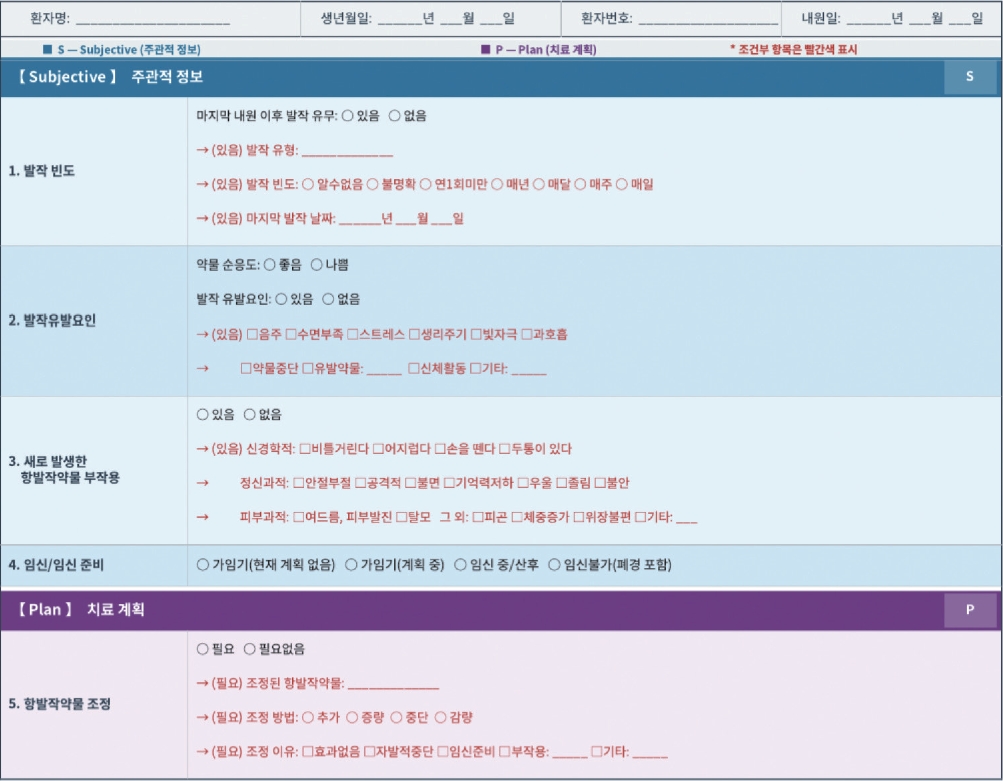
재진은 초진 정보를 단순히 반복하는 것이 아니라 직전 방문 이후의 변화를 감지하여 치료 반응을 평가하고 향후 계획을 수립하는 단계이다. 통상 짧은 시간 내에 이루어지는 재진 환경에서 진료의 완결성을 확보하기 위해서는 변화 확인에 최적화된 간결한 SOAP 구조를 따르는 것이 유용하다. Table 3은 재진에서 확인해야 할 핵심 CDE 항목을 SOAP 구조에 따라 정리한 것으로 이하 본문은 각 항목의 임상적 의미와 확인 방법을 구체적으로 설명한다. 재진 외래에서 활용 가능한 CDE 기록 서식의예는 Fig. 2에 제시하였다. Table 3에는 독립적인 삶의 질 항목을 두지 않았으나 발작 빈도와 마지막 발작 시점, 약물 부작용, 치료 조정 근거를 통해 삶의 질과 밀접한 치료 부담을 임상적으로 파악하도록 구성하였다.
6. 권고 6: 재진 항목의 근거
재진 외래 서식에 포함된 항목은 단순히 정보를 반복적으로 기록하기 위한 것이 아니라 환자의 발작 조절 상태와 치료 반응을 평가하고 향후 치료 전략을 결정하는 데 필요한 핵심 정보를 중심으로 선정하였다. 각 항목은 가능한 경우 기존 문헌과 국제적으로 사용되는 분류 체계 또는 표준 용어 체계를 근거로 구성하였으며 명확한 근거가 부족한 경우에는 전문가 의견을 바탕으로 합의를 통해 결정하였다. 이러한 접근은 실제 외래 진료에서 필요한 최소한의 정보를 구조화하여 기록하면서도 임상적 의사결정에 필요한 맥락을 유지하는 데 도움이 된다.
1) 주관적 정보(subjective): 변화와 순응도 확인
재진에서의 병력 청취는 포괄적인 질문보다는 지난 방문 이후 발생한 사건과 변화에 집중한다.
(1) 발작의 빈도와 마지막 발작 시점(frequency & last occurrence)
지난 방문 이후 발작의 재발 여부와 빈도의 변화를 확인하는 것은 재진의 가장 핵심적인 부분이다. 이는 초진에서 파악한 발작 빈도를 기준으로 치료 이후의 변화를 평가하는 과정이기도 하다. 발작 빈도는 치료 효과를 가장 직접적으로 반영하는 지표로 국제적으로도 일상 진료에서 지속적으로 모니터링해야 할 핵심 임상 지표로 제안되어 왔다[25,38]. 또한 마지막 발작 시점을 함께 기록하면 발작이 없는 기간을 객관적으로 산출할 수 있어 현재 치료가 충분히 유지되고 있는지 평가하고 향후 약물 유지, 감량 또는 중단 논의를 시작하는 근거가 된다[39,40].
(2) 약물 순응도 및 부작용(adherence & adverse effects)
약물 효과를 평가하기에 앞서 복약 순응도를 확인하는 과정이 선행되어야 한다. 환자의 임의 중단, 간헐적 복용, 타 의료기관에서의 처방 변경 등을 확인하지 않으면 발작 악화를 약물 효과 부족으로 오인하여 불필요한 증량으로 이어질 위험이 있다[1,41]. 또한 부작용 평가는 환자가 가장 불편해하는 주요 증상과 그로 인한 일상기능 저하 여부를 중심으로 간략히 확인해야 한다. 비록 본 한국형 CDE에는 표준화된 삶의 질 평가 도구가 핵심 항목으로 포함되지는 않았지만 발작 빈도와 항발작약물 관련 부작용은 삶의 질과 밀접하게 연관되므로 재진에서는 이러한 항목을 치료 유지 여부와 약물 조정 필요성을 판단하는 중요한 근거로 해석할 수 있다. 따라서 별도의 삶의 질(quality of life) 평가 도구를 일괄 적용하지 않더라도 발작 조절 상태와 약물 내약성을 중심으로 삶의 질에 미치는 영향을 임상적으로 확인하는 접근이 현실적이다[42,43].
(3) 유발 요인
초진 시 수면 부족, 음주, 스트레스, 복약 누락 등과 같은 요소를 확인했더라도 재진에서는 지난 방문 이후 생활 요소가 새롭게 변하거나 누적될 수 있으므로 반복 확인이 도움이 된다[1]. 특히 발작 유발 요인은 단일 요인보다 여러 요인이 복합적으로 나타나는 경우가 흔하므로 모든 항목을 다시 나열하기보다 지난 방문 이후의 달라진 점과 발작 직전의 상황을 시간 순서로 확인하는 것이 효율적이다. 이러한 접근은 발작 악화를 약물 효과 부족으로만 해석하는 오류를 줄이고 생활 조정과 자기 관리 교육을 통해 발작 조절을 돕는 데 기여한다[44].
2) 객관적 정보(objective): 검사 결과 및 안전성 점검
재진 외래에서의 객관적 정보 확인의 목적은 새로운 진단 근거를 확보하기보다는 이미 확정된 진단과 치료 계획하에서 환자의 임상 경과와 치료 반응을 확인하는 데 있다. 대부분의 재진 환자는 진단과 기본 치료 전략이 이미 수립된 상태이므로 외래에서는 발작 조절 여부와 치료 관련 문제를 중심으로 평가하는 것이 중요하다.
이 과정에서 필요한 검사 결과나 약물 관련 정보는 대부분 EHR 시스템에서 확인 가능하므로 혈액 검사 결과나 약물 농도 등은 CDE 서식에 별도로 기록하기보다는 해당 정보가 임상적으로 문제가 되는지 여부를 중심으로 판단하는 것이 바람직하다. 예를 들어 항발작약물을 복용 중인 환자에서 혈액 검사 결과를 통해 약물 관련 이상 여부(간기능 이상, 전해질 이상, 혈액학적 이상 등)가 확인되는 경우에는 치료 조정이나 추가 평가를 고려할 수 있다[46,47].
신체 및 신경계 진찰 또한 재진 외래에서 시행될 수 있으나 이는 모든 방문에서 동일하게 수행되는 항목은 아니다. 따라서 발작으로 인한 신체 손상, 피부 발진, 안구진탕 등 임상적으로 의미 있는 소견이 있는 경우에 한하여 필요시 EHR의 자유 기술란이나 메모 기능을 통해 선택적으로 기록하는 것이 적절하다.
이와 같은 접근은 재진 외래에서 불필요한 반복 기록을 줄이고 제한된 진료 시간 내에 발작 조절 상태와 치료 관련 의사결정에 집중할 수 있도록 돕는다.
3) 평가 및 계획(assessment & plan): 조절 상태 평가와 치료 전략 결정
상기 확인된 항목들을 종합하여 현재의 발작이 잘 조절되고 있는지 여부를 판정한다.
재진 외래에서의 평가는 이미 확립된 진단하에서 발작 조절 여부와 약물 부작용을 중심으로 현재 치료가 환자의 일상 기능과 삶의 질에 미치는 영향을 함께 고려하는 데 목적이 있다. 본 서식에는 별도의 삶의 질 척도가 포함되어 있지 않지만 발작이 지속되거나 약물 부작용이 두드러지는 경우에는 삶의 질 저하 가능성을 염두에 두고 약물의 유지, 용량 조절, 약제 변경 또는 추가 평가를 검토할 수 있다. 반대로 발작 발생이 약물 순응도 저하, 수면 부족, 음주 등 명확한 유발 요인과 관련된 경우에는 약물 조정보다는 환자 교육이나 생활습관 교정이 우선될 수 있다.
이러한 평가 결과를 토대로 약물의 유지, 용량 조절, 변경, 또는 중단 여부를 최종적으로 결정하여 처방한다. 약물 변경 시에는 변경 이유(효과 부족/부작용/순응도 문제 등)를 함께 기록하여 향후 치료 경과 해석과 다기관 진료 연속성 확보에 활용한다. 이어 환자에게는 변경된 치료 전략을 설명하고 다음 방문 시까지 수행해야 할 구체적인 과제(정확한 발작 일기 작성, 확인된 유발 요인의 회피, 응급 상황 시 대처 요령 등)를 명확히 설명하여 진료실 밖에서도 환자의 안전 관리가 지속되도록 한다[48].
다만 재진 과정에서 확인된 약물 불응이나 새로운 발작 양상은 단순한 경과 악화를 넘어 초기 진단과 분류 자체의 수정을 시사하는 중요한 단서가 될 수 있다. 따라서 기존 치료에 예상 밖의 반응을 보이거나 의심스러운 병력이 추가로 확인될 경우 기계적으로 약물을 증량하기에 앞서 기존의 진단이 여전히 유효한지를 우선 재검토하는 것이 중요하다[1]. 이러한 경우에는 이후에 제시되는 정기적 재평가 기록 서식을 활용하여 환자의 진단, 분류 및 치료 전략을 보다 체계적으로 재검토하는 것이 바람직하다.
7. 권고 7: 정기적 재평가
뇌전증 진료에서 짧은 재진이 변화의 확인에 집중한다면, 재평가는 질병의 정의를 원점에서 다시 검토하는 과정이다. 중요한 점은 재평가가 별도의 새로운 평가 항목을 구성하는 것이 아니라 초진 단계에서 적용하는 포괄적인 평가 항목을 다시 적용하되 그 목적과 깊이를 달리하는 과정이라는 것이다. 이는 의료진에게 별도의 새로운 평가 도구 학습 부담을 크게 늘리지 않으면서 시간 경과에 따른 진단과 분류의 재검토를 구조화하는 실용적 접근이 될 수 있다.
1) 재평가 대상 및 시기
재평가는 매 방문마다 시행하는 것이 아니라 통상적인 약물 조정에도 불구하고 치료 목표에 도달하지 못하거나 새로운 임상적 의문이 제기될 때 시행한다. 구체적으로는 초기 진단이 불분명했거나 잘 조절되던 발작이 특별한 이유 없이 악화되는 경우, 새로운 뇌파나 뇌영상 결과가 나온 경우, 약물저항뇌전증이 강하게 의심되는 시점이 이에 해당한다[35]. 또한 위와 같은 명확한 임상적 문제가 없더라도 담당의의 판단에 따라 일정 기간(예: 1-2년) 간격으로 진단과 분류의 재검토를 고려할 수 있다. 다만 이러한 간격은 전문가 의견에 기반한 운영적 제안이며 향후 검증이 필요하다. 재평가 주기에 대한 공식적인 근거 기반 권고는 아직 없으나 뇌전증의 자연 경과와 치료 반응이 시간에 따라 변할 수 있다는 점에서 주기적 재검토는 임상적으로 합리적인 접근으로 볼 수 있다[49].
2) 진단 및 분류의 재검토
이 단계에서는 초진 시 수립하였던 잠정 진단을 검증하고 미비했던 임상 정보를 보완하여 진단의 완성도를 높인다. 우선 표준화된 분류 체계를 기준으로 기존의 진단명과 분류가 여전히 유효한지 대조한다. 초기에는 정보 부족으로 미분류(unclassified)나 불명(unknown)으로 남겨두었던 항목들을 축적된 임상 양상과 추가 검사 결과를 바탕으로 확정한다. 아울러 초진 시 수집된 가족력이나 목격자 진술의 정확성 등을 재확인하고 당시에는 미처 확보하지 못했던 추가 정보나 객관적 복약 순응도 결과를 보완하여 임상 데이터의 완결성을 높인다. 이러한 진단 재검토와 정보 보완 과정은 단순한 기록의 재정리를 넘어 진단의 오류를 수정하고 약물저항뇌전증 여부를 판정하는 결정적인 근거가 된다.
3) 계획의 수정 및 심화 치료
재평가 결과를 바탕으로 치료 전략을 근본적으로 수정한다. 새로운 진단을 통해 약물저항뇌전증으로 최종 확정될 경우 단순히 약물을 교체하거나 증량하는 관성적인 치료에서 벗어나야 한다. 대신 수술 치료를 위한 비디오 뇌파 모니터링이나 케톤 생성 식이 요법 등 고난도 치료 방법을 적극적으로 검토하고 필요 시 전문 뇌전증 센터로의 의뢰를 포함한 구체적인 실행 전략을 수립해야 한다[35]. 이러한 주기적인 재평가는 관성적인 처방으로 인하여 환자가 치료의 사각지대에 방치되는 것을 막는 실질적인 안전 장치가 될 수 있다.
한계점
본 권고안에는 몇 가지 한계가 있다. 첫째, 본 권고안은 기존 한국형 CDE 개발 연구와 장기간의 전문가 논의를 토대로 작성된 실용적 합의문이지만 별도의 정량적 투표를 포함한 정식 델파이 기법, 체계적 문헌 연구, 근거 수준 평가, 권고 강도 산정을 거친 임상 진료지침은 아니다. 따라서 본 논문에서 제시한 권고는 엄밀한 근거 등급을 반영한 지침이라기보다는 실제 외래 진료에서의 적용 가능성과 다수 전문가 합의를 반영한 실용적 제언으로 해석되어야 한다. 둘째, 의견 수렴 과정에 참여한 전문가들은 주로 대학병원 또는 상급종합병원 기반의 뇌전증 전문의들이었으므로 일차의료기관이나 비전문 진료 환경에 그대로 일반화하는 데에는 제한이 있을 수 있다. 셋째, 본 권고안의 직접적 적용 범위는 일반적인 성인 뇌전증 외래 진료이며 소아 환자, 첫 발작, 임신, 약물저항뇌전증, 수술 평가 대상자 등 특수 상황을 위한 세부 모듈은 충분히 다루지 못하였다. 또한 환자와 보호자 대표가 권고안 개발 과정에 직접 참여하지 않았고 삶의 질이나 정신 건강과 같은 환자 중심 항목은 문서화 부담을 고려하여 독립된 핵심 구조화 항목으로 충분히 포함되지 못하였다. 넷째, 표준화된 CDE가 실제 진료의 일관성과 데이터 품질을 향상시킬 가능성은 높지만 각 기관의 EHR 시스템 구조, 인력, 기술적 지원 수준이 서로 달라 실제 도입의 용이성과 문서화 부담은 차이가 있을 수 있다. 특히 복잡한 환자나 매우 짧은 외래 시간의 진료 환경에서는 일부 항목의 완전한 기록이 어려울 수 있다. 마지막으로 본 권고안이 진료 효율, 사용자 만족도, 환자 예후, 다기관 데이터 품질을 얼마나 개선하는지는 아직 전향적으로 검증되지 않았다. 따라서 향후 실제 적용 연구를 통해 항목별 완결성, 사용자 간 일치도, 진료 시간에 미치는 영향, 환자 중심 성과를 평가하면서 권고안을 지속적으로 보완할 필요가 있다.
결 론
뇌전증은 환자의 병력 청취가 진단과 치료 방침 결정에 절대적인 비중을 차지하는 질환이다. 그러나 현실적으로 매우 짧은 국내 진료 환경은 의사로 하여금 환자의 수많은 호소 중 무엇을 청취하고 무엇을 선별해야 할지 끊임없이 선택하게 만든다. 이 과정에서 발생할 수 있는 중요 정보의 누락은 곧 환자의 안전 문제와 직결될 수 있다. 본 권고안에서 제안한 한국형 CDE는 제한된 외래 시간 내에 핵심 정보를 보다 구조화하여 기록하기 위한 실용적 도구이다. 이러한 접근은 필수 정보의 누락을 줄이고 문서화의 일관성을 높이는 데 도움을 줄 수 있다.
동일한 구조의 CDE 사용이 확산될 경우 기관 간 기록 형식의 표준화와 핵심 정보 전달의 일관성을 지원할 수 있다. 또한 축적된 구조화 데이터는 향후 다기관 관찰 연구, 삶의 질 향상 활동, 임상 의사결정 지원 도구 개발 가능성을 검토하는 데 기초 자료로 활용될 수 있다. 현재의 CDE는 임상적 실용성을 우선하여 필수 항목 위주로 설계되었으나 향후 진료 현장의 경험이 쌓임에 따라 점진적으로 고도화될 것으로 기대된다.
향후에는 실제 진료 현장에서의 적용 결과와 환자 중심 성과를 포함한 전향적 검증을 통해 본 권고안을 지속적으로 보완할 필요가 있다. 한국형 CDE가 제한된 시간이라는 현실적 한계 속에서도 최선의 치료를 고민하는 임상의들에게 실용적인 참고 틀로 활용되기를 기대한다.


 PDF Links
 PubReader
 ePub Link
 Full text via DOI
 Download Citation
 Print
Print