그림 속의 잠

Sleep in the Frame: Reflections from Art

Article information

J Korean Neurol Assoc. 2026;44(1):81-84
Publication date (electronic) : February 1, 2026
doi : http://dx.doi.org/10.17340/jkna.2025.0057
Department of Internal Medicine, Seoul National University College of Medicine, Seoul, Korea
한성구
서울대학교 의과대학 내과학교실
Address for correspondence Sung Koo Han, MD, PhD Department of Medicine, College of Medicine, Seoul National University, 103 Daehak-ro, Jongno-gu, Seoul 03080, Korea E-mail: hansk@snu.ac.kr
received : December 11, 2025 , rev-recd : December 11, 2025 , accepted : December 11, 2025 .

우리는 인생의 4분의 1에서 3분의 1은 잠으로 보낸다. 잠은 뇌의 휴식이며 매우 중요한 신경생리 기전이다. 그림 속의 잠의 모습은 어떨까 찾아보기로 한다.

두 그림은 약 280년의 시간 차이가 있는 그림인데 제목은 똑같이 자는 여인이다(Fig. 1) [1,2]. 표현주의 그림인 Corinth의 그림은 여인이 완전히 곯아떨어진 모습을 보여준다. 온 몸의 근육이 완전히 이완된 모습이다(Fig. 1-A) [1]. 이에 반해 1615년의 Feti의 그림은 눈을 감고 있을 뿐 깨어 있는 모습과 큰 차이가 없다. 마치 자는 척하는 모습이다(Fig. 1-B) [2]. 잠에 대한 생리학적 이해의 차이가 보인다.
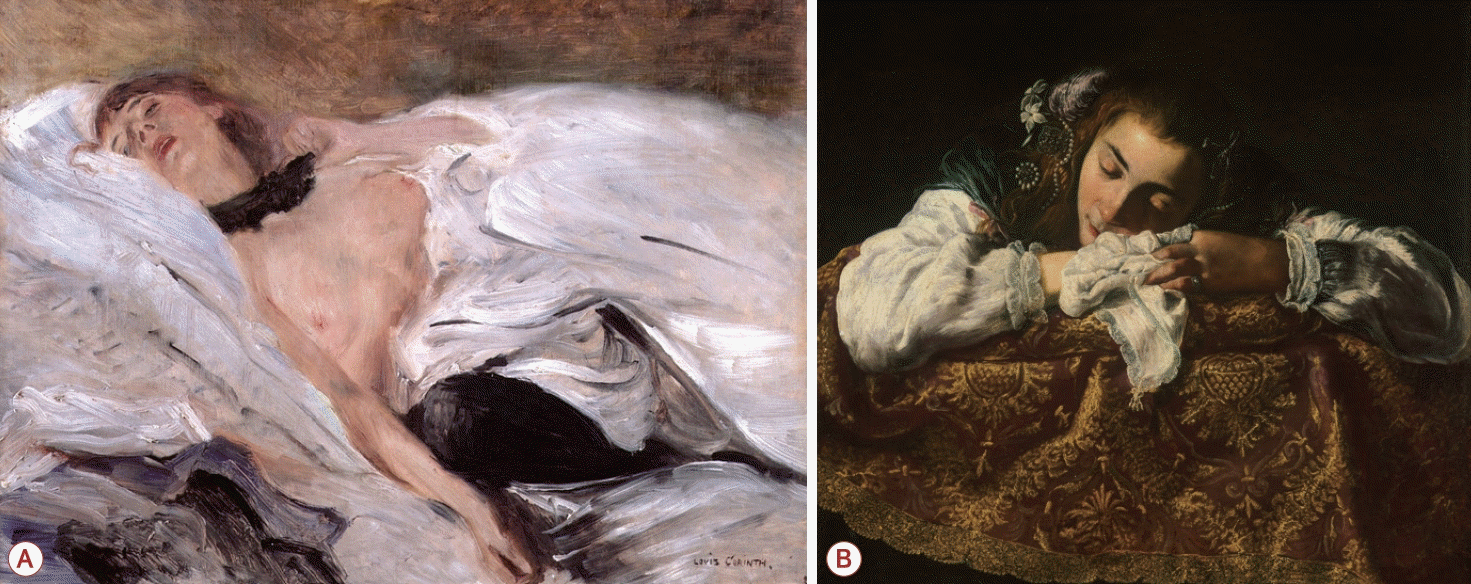
Figure 1.

(A) Lovis Corinth’s Sleeping Girl (1899) depicts a young woman in deep, complete sleep with fully relaxed musculature[1]. (B) Domenico Feti’s Sleeping Girl (1615, Museum of Fine Art Budapest) portrays a woman whose eyes are closed but whose posture remains tense, suggesting a state closer to feigned sleep than true physiological rest[2].

고대부터 인간은 잠을 죽음으로 연상해 왔다. 영원한 잠은 곧 죽음이다. 고대 그리스 신화에서 잠의 신과 죽음의 신(Hypnos & Thanatos)을 그린 Waterhouse의 그림을 보면 잠의 신과 죽음의 신은 half brother로 표현되었다(Fig. 2-A) [3]. 그러니 아침에 깨는 모습은 부활로 여기기도 하였다. Gregory의 아침에 깨는 모습은 눈은 아직 뜨지 않았지만 깨기 직전에 손과 손가락이 움직이는 순간을 그렸다(Fig. 2-B) [4]. 눈을 이제 막 뜨려는 순간이다. 눈을 뜬 모습을 그린 다른 화가들의 작품과는 조금 다르다. 그만큼 잠에서 깨는 모습을 직접 많이 보고 고민해서 그린 것임을 알 수 있다.
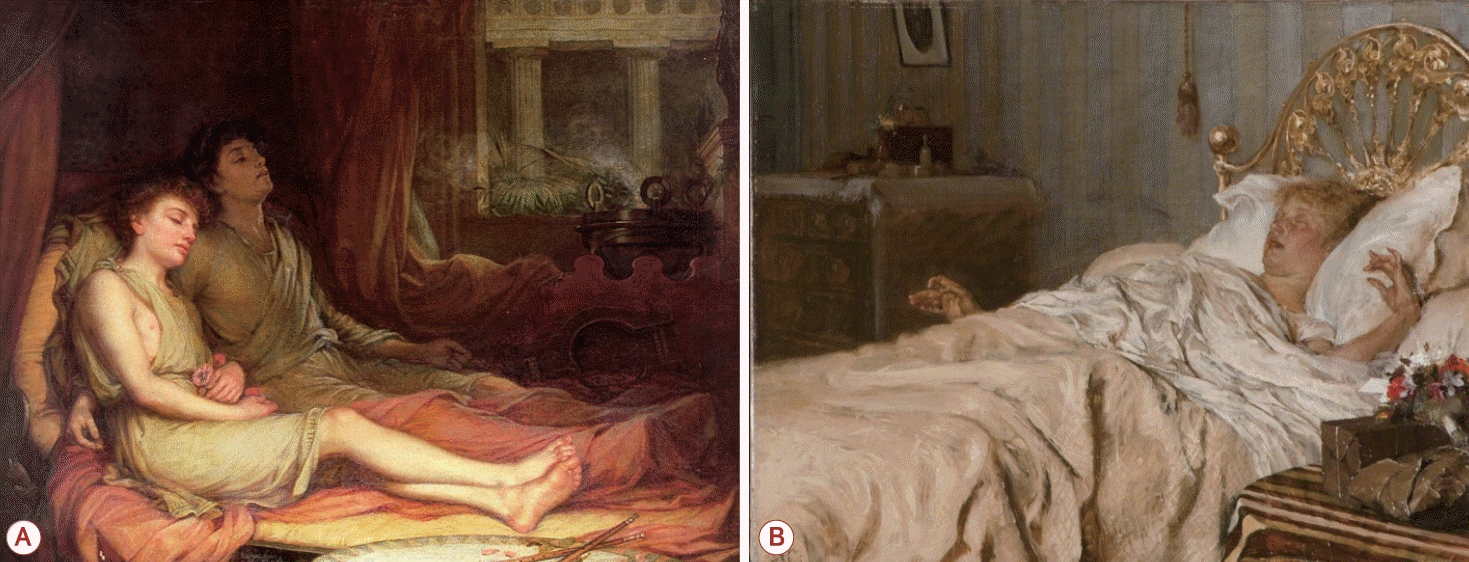
Figure 2.

(A) John William Waterhouse’s Sleep and His Half-brother Death (1874) symbolically illustrates the ancient association between sleep and death, portraying the mythological brothers in serene stillness[3]. (B) Edward John Gregory’s Morning Awakening (Canterbury Museum) captures the moment just before awakening, with the subject’s hands and fingers beginning to move while the eyes remain closed[4].

잠은 매우 달콤한 것이고 건강의 황금 사슬이지만 때로는 절대로 자서는 안 되는 순간에 잠에 빠져서 큰 낭패를 겪는 경우가 있다. 그리스 신화에 나오는 아리아드네는 마치 낙랑공주가 자명고를 찢듯 미로를 빠져나오도록 테세우스를 도왔다. 사랑하는 테세우스를 따라 아테네를 향하면서 장밋빛 꿈에 부풀었지만 테세우스는 처음부터 이 공주를 아테네로 데려갈 의사가 없었다. 배가 잠시 기착한 낙소스 섬에서 그만 아리아드네는 잠에 빠졌는데 테세우스는 공주를 버리고 배를 출항시켰다. 안젤리카 카우프만이 이 장면을 잘 그렸다(Fig. 3-A) [5].
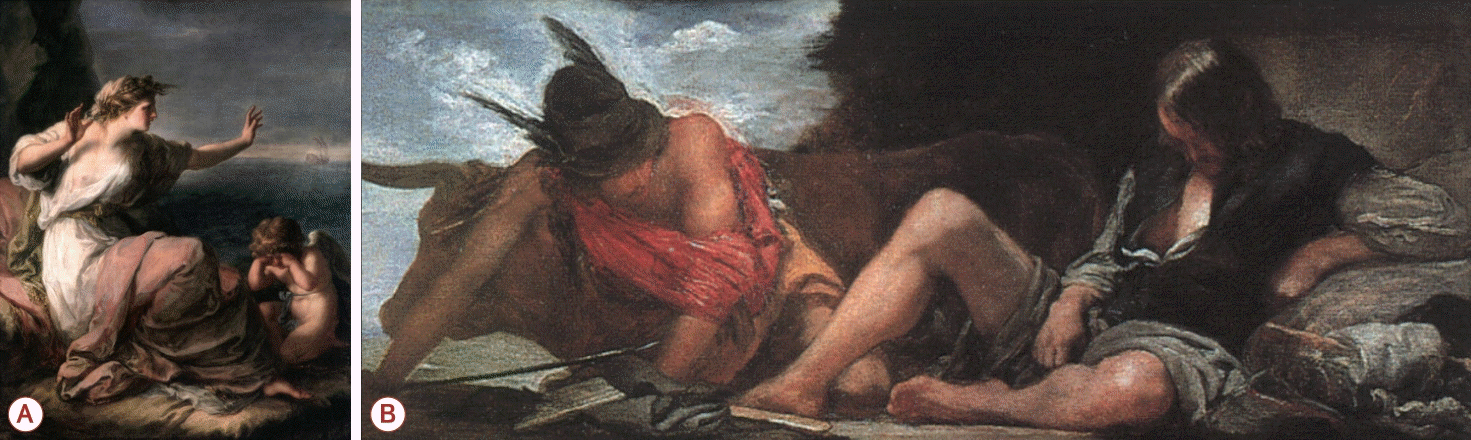
Figure 3.

(A) Angelica Kauffmann’s Ariadne Abandoned by Theseus depicts the tragic moment when Ariadne, lost in sweet sleep, is left behind by Theseus as he departs by ship[5]. (B) Diego Velázquez’s Mercury and Argus (1659, Museo del Prado Madrid) shows Mercury rising silently, sword in hand, as the hundred-eyed Argus succumbs to sleep, his final eye closing[6].

디에고 벨라스케스가 그린 머큐리와 아르구스는 100개의 눈이 하나씩 감기다가 마지막 눈이 감기는 순간 머큐리가 조용히 몸을 일으키고 있다. 손에는 칼이 있고 곧 아르구스의 목은 떨어질 것이다. 초긴장 상태인 머큐리의 모습을 기가 막히게 그렸다(Fig. 3-B) [6].

매우 피로할 때는 잠 이외에는 회복을 할 수가 없다. 20세기 초 북유럽에서는 여성들의 가사 노동, 육아의 고달픔을 그린 그림이 많이 나왔다. 여성 참정권이 가장 빨리 인정된 곳이다. 렘브란트의 사실상의 두 번째 부인인 헨드리케가 쪼그리고 잠에든 그림은 매우 애틋한 그림이면서 완전히 개인적인 감정을 그린 그림이다(Fig. 4-A) [7]. 그런데 크리스티안 크로그의 잠에 든 젊은 엄마와 아이의 그림은 역시 마음을 아프게 하지만 이 화가들은 개인적인 감정뿐 아니라 사회적인 주제를 그린 것이다(Fig. 4-B) [8]. 입센의 인형의 집이 큰 반향을 일으킨 후 북유럽의 화가들은 사회적인 주제를 많이 다뤘다. 이제 세상이 달라진 것이다. 케테 콜비츠의 가사 노동이라는 그림 역시 거의 극한에 몰린 여인의 모습이다. 그냥 잔다고 표현하기가 미안할 정도이다(Fig. 4-C) [9]. 이럴 때 우리는 까무라쳤다고 표현한다.
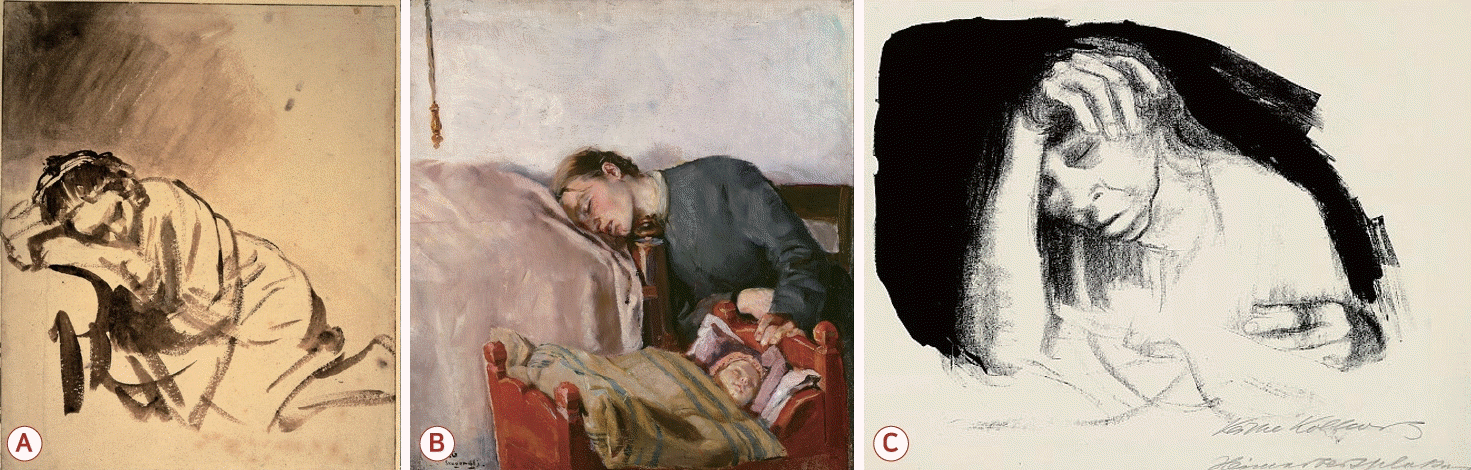
Figure 4.

(A) Rembrandt’s Hendrickje Sleeping (1655, British Museum London) tenderly portrays his companion Hendrickje dozing in a crouched position, expressing personal affection and intimate emotional depth[7]. (B) Christian Krohg’s Mother and Child (1883, Natioal Gallery Oslo) reflects the exhaustion of a young mother who has fallen asleep while caring for her child, highlighting the social realities of domestic labor[8]. (C) Käthe Kollwitz’s Home Labor (1925) depicts a woman collapsed in extreme fatigue, emphasizing the near-breaking point reached through relentless domestic hardship[9].

자는 자세에 따라 질병의 경과에 영향을 주는 경우가 있다. 수면무호흡증후군의 경우는 반듯이 누워서 자면 무호흡이 더 심해진다. 이 병을 앓고 있는 환자가 장거리 비행을 할 때 비즈니스 좌석에서 거의 누운 자세로 가는 것보다 이코노미 좌석에서 앉은 자세로 자면 수면의 질이 더 낫다는 말을 듣는다(Fig. 5-A, B) [10,11]. 폐 하나가 많이 망가진 경우에는 좋은 폐를 아래쪽으로 하는, 옆으로 자는 자세가 훨씬 산소 포화도를 높게 할 수 있다(Fig. 5-C) [12]. 후비루로 인한 만성 기침으로 고생하는 환자는 엎드려서 자는 것을 권한다(Fig. 5-D) [13].
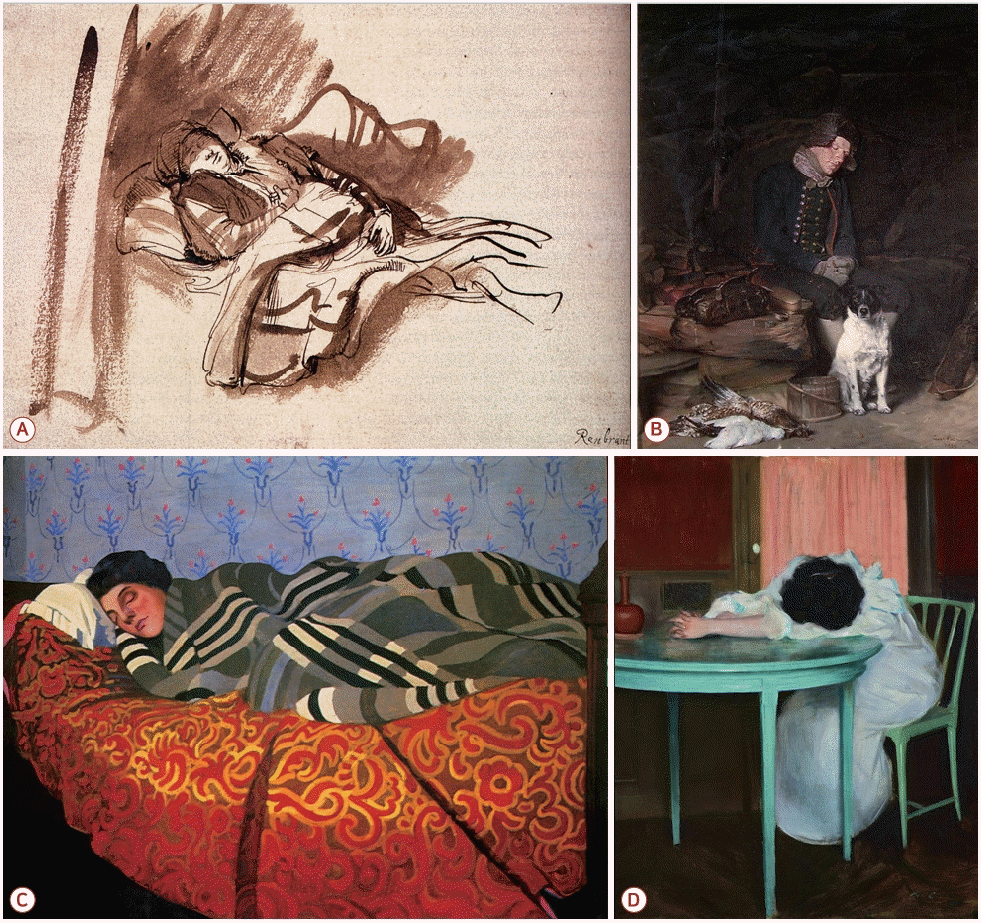
Figure 5.

(A) Rembrandt’s Saskia Asleep in Bed (1635) shows a conventional supine sleeping posture, commonly associated with restful sleep[10]. (B) Carl Frederick Sundt-Hansen’s Sleeping Hunter (1885, National Gallery Oslo) illustrates a seated sleeping position, which may reduce snoring and sleep apnea severity[11]. (C) Felix Vallotton’s Sleeping Woman (1899) depicts a woman resting on her side, a position often adopted by individuals with unilateral lung damage to optimize oxygenation[12]. (D) Ramon Casas’ Tired (1895-1900) portrays an exhausted figure sleeping prone, a posture that can alleviate coughing caused by postnasal drip[13].

References

1. Corinth L. Schlafendes Mädchen (Sleeping Girl). [online]. [cited 2025 Jan 15]. Available from: https://commons.wikimedia.org/wiki/File:Lovis_Corinth_Schlafendes_M%C3%A4dchen_1899.jpg.
2. Fetti D. Sleeping Girl. [online]. [cited 2025 Jan 15]. Available from: https://commons.wikimedia.org/wiki/File:Domenico_Fetti_-_Sleeping_Girl_-_WGA7863.jpg.
3. Waterhouse JW. Sleep and His Half-brother Death. [online]. [cited 2025 Jan 15]. Available from: https://commons.wikimedia.org/wiki/File:Waterhouse-sleep_and_his_half-brother_death-1874.jpg.
5. Kauffmann A. Ariadne Abandoned by Theseus. [online]. [cited 2025 Jan 15]. Available from: https://commons.wikimedia.org/wiki/File:Angelica_Kauffmann_-_Ariadne_Abandoned_by_Theseus_-_Google_Art_Project.jpg.
6. Velázquez D. Mercury and Argus. [online]. [cited 2025 Jan 15]. Available from: https://commons.wikimedia.org/wiki/File:Diego_Vel%C3%A1zquez_-_Mercury_and_Argus_-_WGA24471.jpg.
7. Rembrandt H. Hendrickje Schlafend (Hendrickje Sleeping). [Internet]. [cited 2025 Jan 15]. Available from:https://commons.wikimedia.org/wiki/File:Rembrandt,_Hendrickje_schlafend.jpg.
8. Krohg C. Mor og Barn (Mother and Child). [online]. [cited 2025 Jan 15]. Available from: https://commons.wikimedia.org/wiki/File:Mother_and_Child_-_Mor_og_barn_-_Christian_Krohg_-_IMG_9794-_national_gallery_oslo_(cropped).jpg.
9. Kollwitz K. Home Labor. [online]. [cited 2025 Jan 15]. Available from: https://sammlung.staedelmuseum.de/en/work/homework.
10. Rembrandt H. Saskia Asleep in Bed. [online]. [cited 2025 Jan 15]. Available from: https://commons.wikimedia.org/wiki/File:Rembrandt_Saskia_Asleep_in_Bed.jpg.
12. Vallotton F. Femme Couchée Dormant (Sleeping Woman). [online]. [cited 2025 Jan 15]. Available from: https://commons.wikimedia.org/wiki/File:F%C3%A9lix_Vallotton%2C_1899_-_Femme_couch%C3%A9e_dormant.jpg.
13. Casas R. Tired. [online]. [cited 2025 Jan 15]. Available from: https://artvee.com/dl/tired-2/.

Article information Continued

Figure 1.

(A) Lovis Corinth’s Sleeping Girl (1899) depicts a young woman in deep, complete sleep with fully relaxed musculature[1]. (B) Domenico Feti’s Sleeping Girl (1615, Museum of Fine Art Budapest) portrays a woman whose eyes are closed but whose posture remains tense, suggesting a state closer to feigned sleep than true physiological rest[2].

Figure 2.

(A) John William Waterhouse’s Sleep and His Half-brother Death (1874) symbolically illustrates the ancient association between sleep and death, portraying the mythological brothers in serene stillness[3]. (B) Edward John Gregory’s Morning Awakening (Canterbury Museum) captures the moment just before awakening, with the subject’s hands and fingers beginning to move while the eyes remain closed[4].

Figure 3.

(A) Angelica Kauffmann’s Ariadne Abandoned by Theseus depicts the tragic moment when Ariadne, lost in sweet sleep, is left behind by Theseus as he departs by ship[5]. (B) Diego Velázquez’s Mercury and Argus (1659, Museo del Prado Madrid) shows Mercury rising silently, sword in hand, as the hundred-eyed Argus succumbs to sleep, his final eye closing[6].

Figure 4.

(A) Rembrandt’s Hendrickje Sleeping (1655, British Museum London) tenderly portrays his companion Hendrickje dozing in a crouched position, expressing personal affection and intimate emotional depth[7]. (B) Christian Krohg’s Mother and Child (1883, Natioal Gallery Oslo) reflects the exhaustion of a young mother who has fallen asleep while caring for her child, highlighting the social realities of domestic labor[8]. (C) Käthe Kollwitz’s Home Labor (1925) depicts a woman collapsed in extreme fatigue, emphasizing the near-breaking point reached through relentless domestic hardship[9].

Figure 5.

(A) Rembrandt’s Saskia Asleep in Bed (1635) shows a conventional supine sleeping posture, commonly associated with restful sleep[10]. (B) Carl Frederick Sundt-Hansen’s Sleeping Hunter (1885, National Gallery Oslo) illustrates a seated sleeping position, which may reduce snoring and sleep apnea severity[11]. (C) Felix Vallotton’s Sleeping Woman (1899) depicts a woman resting on her side, a position often adopted by individuals with unilateral lung damage to optimize oxygenation[12]. (D) Ramon Casas’ Tired (1895-1900) portrays an exhausted figure sleeping prone, a posture that can alleviate coughing caused by postnasal drip[13].