입천장떨림을 동반한 임상 추정 진행핵상마비
Clinically Probable Progressive Supranuclear Palsy with Palatal Tremor
Article information
진행핵상마비(progressive supranuclear palsy, PSP)는 4-repeat 타우 단백질의 축적에 의해 발생하는 신경퇴행질환으로 안구운동장애, 체위 불안정, 파킨슨증 및 인지기능 저하를 보이는 대표적인 비정형 파킨슨증후군이다. 최근 Movement Disorder Society (MDS)의 진단 기준 개정으로 임상 아형이 세분화되었고 질병 초기의 미세한 신경계 징후들에 대한 관심이 증가하고 있다[1].
입천장떨림(palatal tremor)은 물렁입천장(soft palate)의 율동성 수축을 특징으로 하는 드문 이상운동 증상으로 본태(essential) 입천장떨림과 증상(symptomatic) 입천장떨림으로 나뉜다. 이 중 증상 입천장떨림은 주로 Guillain-Mollaret 삼각(Guillain-Mollaret’s triangle)신경의 병변과 연관된다[2]. 반면 신경퇴행질환에서 동반은 매우 드물며 특히 PSP 환자에서의 보고는 극히 제한적이다. 저자들은 특징적인 임상 양상과 영상 소견을 보인 추정 PSP 환자에서 입천장떨림이 동반된 증례를 경험하였기에 이를 보고하고자 한다.
증 례
62세 남자가 3년 전부터 시작된 우측 손떨림과 1년 전부터 진행된 구음장애 및 목소리 떨림으로 왔다. 우울증 및 수면장애로 트라조돈(trazodone)과 졸피뎀(zolpidem)을 복용 중이었으며 특이 과거력이나 가족력은 없었다.
신경계 진찰에서 가면얼굴(masked face)과 감소한 눈 깜박임, 우측이 더 뚜렷한 경도의 안정떨림(resting tremor), 운동완만(bradykinesia), 경축(rigidity)이 관찰되었고 목의 경축도 동반되었다. 보행 시 우측으로 편향된 자세와 체위 불안정이 있었으며 통합 파킨슨병척도(unified Parkinson’s disease rating scale, UPDRS) 운동척도 점수는 17점, 수정 Hoehn and Yahr 척도(modified Hoehn and Yahr scale)는 2.5였다. 환자는 경미한 구음장애 및 목소리 떨림을 호소하였고 진찰 중 환자 스스로 인지하지 못한 입천장떨림이 관찰되었다. 물렁입천장이 약 1.8-2.0 Hz의 주기로 율동성 수축을 보였으며 환자는 떨림과 관련된 청각 증상은 없다고 하였다(Supplementary Video 1). 안구운동 검사에서 수직신속보기(vertical saccade) 잠복기 지연 및 속도 감소가 있었지만 안구운동 범위의 제한은 없었으며 안구가 수직 운동 시 중앙에서 벗어나 곡선 형태로 비스듬하게 움직이는 곡선회전형 안구운동(round the houses sign)이 확인되었다(Supplementary Video 2). 소뇌기능 검사를 포함한 그 외 신경계 진찰 소견은 정상이었다. 자율신경계 이상 소견이나 인지기능 저하는 관찰되지 않았으며 단축형 노인우울척도 점수는 14점으로 우울 성향이 확인되었다.
뇌자기공명영상에서는 6년 전 어지럼증이 있어 시행한 영상과 비교하여 T2강조영상에서 양측 아래올리브핵(inferior olivary nuclei)의 고신호 및 비대화가 새로 관찰되었고(Fig. A, B) 시상(sagittal) T1강조영상에서 중뇌 위축이 진행되어 위 윤곽이 평평함이 확인되었다(Fig. C, D). 18F- fluoropropylcar bomethoxyiodophenylnortropane (18F-FP-CIT) 양전자방출단층촬영(positron emission tomography, PET)에서 양측 조가비핵(putamen)의 도파민운반체 섭취 저하가 좌측에서 더 두드러졌다. 레보도파-카비도파복합제인 퍼킨(perkin)을 100 mg/25 mg 하루 3회 투약을 시작하였으나 증상의 호전은 없었고 입천장떨림 역시 지속되었다. UPDRS 운동척도 점수는 17점으로 치료 전후 변화가 없었다.
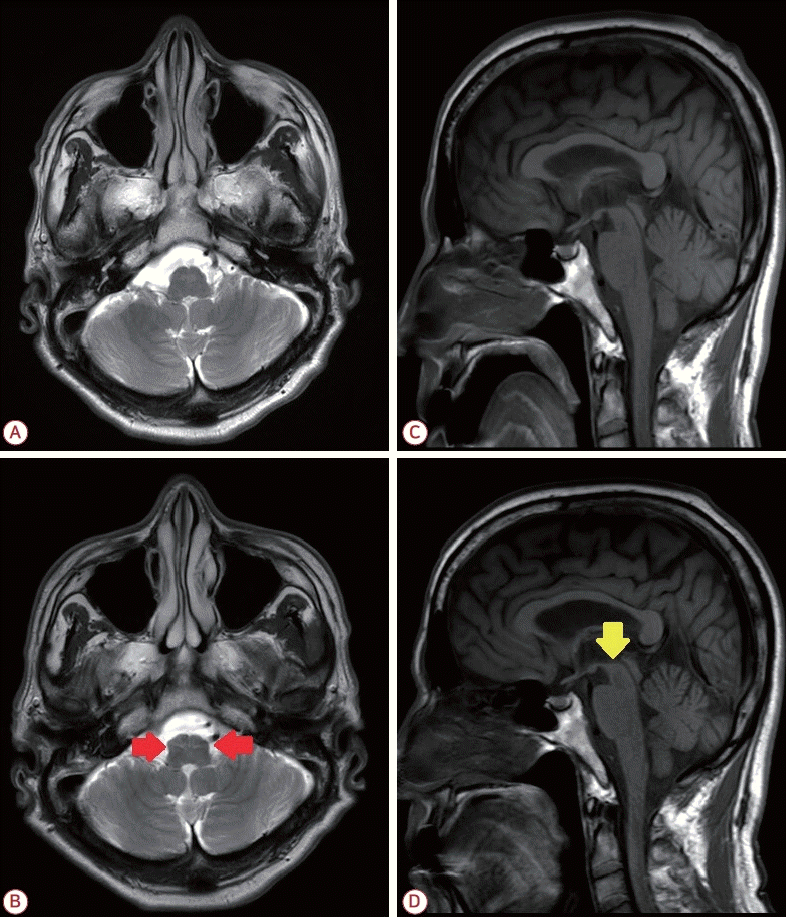
Brain magnetic resonance imaging (MRI) findings of the patient. (A, C) Axial T2-weighted and sagittal T1-weighted MRIs obtained 6 years earlier. (B) Axial T2-weighted MRI demonstrates newly developed symmetrical hyperintensity and hypertrophy of the bilateral inferior olivary nuclei (red arrows, hypertrophic olivary degeneration) compared to (A). (D) Sagittal T1-weighted MRI shows interval progression of midbrain atrophy with flattening of the superior midbrain contour (yellow arrow, hummingbird sign) compared to (C).
고 찰
PSP의 대표적인 안구운동장애는 하방주시마비지만 이는 질환 진행 후에 나타나는 경우가 많아 조기 진단의 민감도가 떨어지는 한계가 있다. 최근 MDS 진단 기준에서는 이러한 한계를 보완하기 위하여 초기부터 관찰될 수 있는 수직신속보기의 지연 또는 속도 감소, 거대사각파된떨림(macro square wave jerk), 곡선회전형 안구운동과 같은 미세한 이상 소견들을 진단의 주요 지표로 포함하였다[1]. 이 중 곡선회전형 안구 운동은 수직신속보기를 담당하는 안쪽세로다발입쪽사이질핵(rostrointerstitial nucleus of the medial longitudinal fasciculus, riMLF)의 조기 기능 이상을 나타내는 특이적 소견으로 알려져 있다[3]. 본 증례에서는 우측이 더 뚜렷한 안정떨림, 운동완만, 목의 경축 등 비대칭 파킨슨증(핵심 소견 A2)과 함께 수직신속보기의 잠복기 지연 및 속도 감소(핵심 소견 O2), 곡선회전형 안구운동(핵심 소견 O3)이 관찰되었다. 이런 소견은 MDS 진단 기준에 따라 임상적 추정 진행핵상마비-파킨슨증(probable PSP-P)으로 판단하였고 레보도파 투약을 시작하였으나 뚜렷한 증상의 호전은 없었다[1].
한편 본 증례에서 가장 특기할 점은 PSP 환자에서 드물게 관찰된 입천장떨림이다. 입천장떨림은 일반적으로 Guillain-Mollaret 삼각의 구조적 병변에 의해 발생하며 뇌간 병변이나 뇌졸중 후 이차적으로 관찰된다[2]. 하지만 본 증례와 같이 신경퇴행질환에서 보고는 매우 드물며 임상적 중요성이나 병태생리 기전에 대해서도 아직 명확히 밝혀진 바가 없다. 기존 보고에서는 PSP 환자에서 입천장떨림이 동반된 경우 병리학적으로 치아핵(dentate nucleus)의 위축과 신경아교증(gliosis), 상소뇌다리(superior cerebellar peduncle)의 탈수초화, 일부 사례에서 치아핵의 철분 침착이 확인된 바 있다[4,5].
본 증례 역시 T2 강조 자기공명영상에서 양측 아래올리브핵의 고신호 및 비대화(hypertrophic olivary degeneration, HOD)가 확인되어 Guillain-Mollaret 삼각 경로의 이차 변성이 PSP 병태생리의 일부일 가능성을 시사한다. 또한 최근 보고된 진행실조와 입천장떨림증후군(progressive ataxia with palatal tremor, PAPT)에서는 뚜렷한 구조적 병변 없이도 점진적인 소뇌실조와 입천장떨림이 함께 나타나는 임상 양상이 기술되고 있으며 이러한 경우 타우 병증과의 병리적 중복 가능성이 제기되고 있다[6,7]. 본 증례 또한 이러한 임상적 특징과 유사한 양상을 보여 입천장떨림이 PSP의 특정 아형을 반영하거나 독립적 표현형일 가능성을 시사한다. 임상적으로 입천장떨림은 환자가 자각하지 못하는 경우가 많고, 증상이 경미하면 진찰 과정에서 쉽게 간과될 수 있다. 그러나 이 소견은 특정 신경퇴행질환의 임상적 표현형을 반영할 수 있는 중요한 단서가 될 수 있으므로 세심한 관찰이 필요하다. 특히 기존 문헌의 대부분은 질환이 상당히 진행된 후 보행장애나 체위 불안정이 뚜렷해진 시점에서 진단된 사례들로 조기 진단에 대한 근거는 제한적이었다[4,5]. 이에 반해 본 증례는 MDS 최신 진단 기준을 적용하여 비교적 질환 초기 단계에서 임상적 추정 PSP를 진단하였다는 점에서 차별성을 지닌다.
결론적으로 본 증례는 입천장떨림과 아래올리브핵 변성, 특징적인 안구운동장애가 동반된 드문 임상적 추정 PSP 사례로 병리 증거가 제시되지는 못하였지만 PSP의 임상 스펙트럼과 병태생리 이해에 의미 있는 시사점을 제공한다.
Supplementary Material
This video demonstrates palatal tremor in the patient. The soft palate shows rhythmic involuntary contractions, which are not perceived by the patient.
This video shows abnormal vertical saccades in the patient. Vertical saccades demonstrate delayed initiation and reduced velocity, and the eyes move along a curved trajectory rather than a straight vertical path, consistent with the 'round the houses' sign.